Razer Carbon Fiber Mice: Viper V4 Pro and DeathAdder V4 Pro Go Lighter at $249.99
By AS Gaming EditorialNovember 18, 20265 min readPC
Source: Razer (official product art)
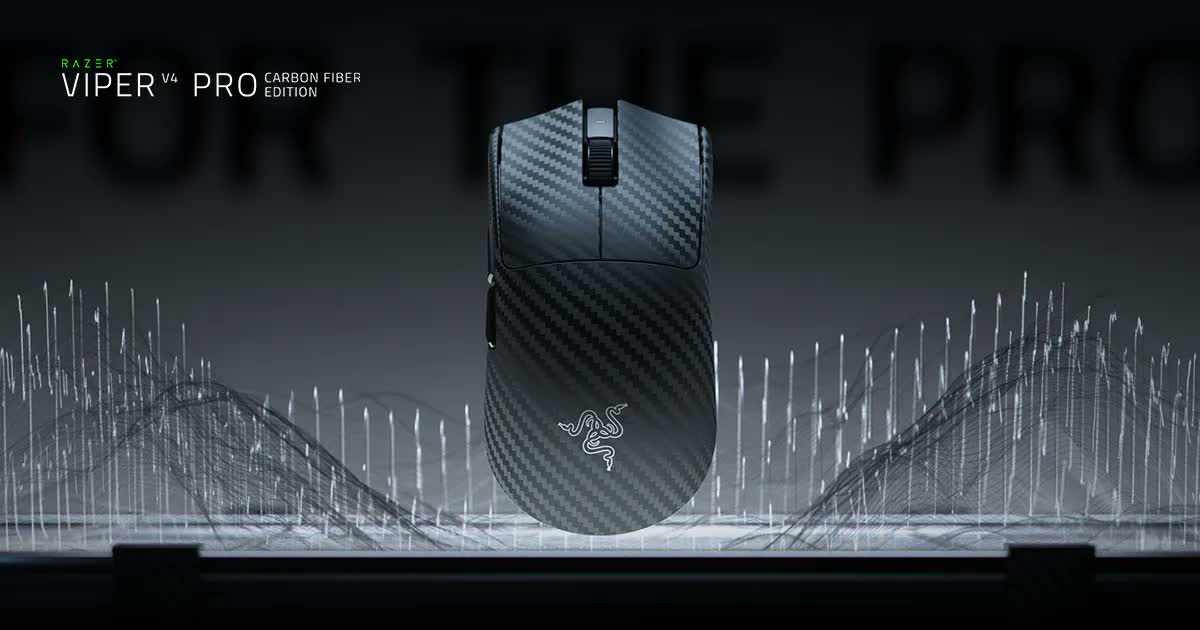
Razer has gone carbon fiber. The Razer Carbon Fiber mice collection launched November 17, bringing real woven carbon fiber shells to two of the company's flagship esports mice, and the headline numbers are hard to ignore: the Viper V4 Pro Carbon Fiber Edition weighs 47 grams, and the DeathAdder V4 Pro Carbon Fiber Edition weighs 49 grams. Both cost $249.99. The question is whether a new shell material is worth a $90 premium over the standard models, and the honest answer is that it depends entirely on what kind of player you are.
Razer Carbon Fiber mice: what you actually get for $249.99
This is not a paint job. Razer rebuilt both shells using genuine woven carbon fiber in a 2x2 twill weave, hot-pressed and cured under heat and pressure. According to Razer, the carbon fiber shell is up to 53 percent stronger than ABS plastic while helping reduce overall weight. The Viper drops from 49 grams to 47, and the DeathAdder drops further, with its carbon edition also getting a sensor upgrade and longer battery life compared with the base model.
Crucially, the shapes have not changed. These are the same Viper V4 Pro and DeathAdder V4 Pro silhouettes that professional players already use, which means existing fans do not have to relearn their grip. Razer's global head of design, Charlie Bolton, framed it as giving pros the shapes they know in a trusted material that is lighter and stronger. That is the whole pitch: same mouse, better material.
The internals are flagship grade
Both mice run on the Focus Pro 50K Optical Sensor Gen-3, HyperSpeed Wireless Gen-2, and Optical Mouse Switches Gen-4, with battery life rated at up to 180 hours. The standard Viper V4 Pro already supports true 8,000 Hz polling in wireless and wired modes, with click latency averaging as low as 0.204 ms, and the carbon editions keep all of that. Digital Foundry called the standard Viper V4 Pro the apex of ultra-light gaming mice when it reviewed the $159.99 original, and nothing about the carbon versions changes that verdict on performance.
The DeathAdder is arguably the more interesting of the two. Its carbon edition gets both the sensor upgrade and a longer battery, which closes the gap with the Viper on specs while keeping the ergonomic right-handed shape that DeathAdder fans prefer. If you have ever found the Viper too flat and symmetrical, the carbon DeathAdder is the one to look at.
The price question
Here is where it gets tricky. The standard Viper V4 Pro costs $159.99. The carbon fiber version costs $249.99. That is $90 for two grams and a stronger shell. For most players, that math does not work: two grams is not something human hands can reliably feel, and the standard Viper is already one of the lightest mice you can buy. The carbon shell is genuinely stronger, which matters if you travel with your mouse or you are rough on gear, but durability is not why most people buy a 47-gram mouse.
Who is this for, then? Competitive players chasing every marginal gain, collectors who want the halo product, and anyone who has cracked a plastic shell before and never wants to do it again. Everyone else should buy the standard Viper V4 Pro and spend the $90 difference on a better mousepad. The Logitech G PRO X3 Superstrike is worth a look too if you are shopping in this price range, and our best budget gaming mice guide covers the sensible end of the market.
Verdict: a halo product, done properly
Razer deserves credit for doing this properly instead of slapping a carbon-look sticker on a plastic shell. The material is real, the weight savings are real, and the shapes are the ones pros actually use. It is also, by any reasonable measure, a luxury purchase. The standard models deliver the same sensor, the same polling rate, and nearly the same weight for $90 less. But halo products are not about value, they are about the best version of a thing, and on that measure the carbon fiber Vipers are exactly what they claim to be. Both mice are available now from Razer and select retailers. Read the full announcement coverage at KitGuru or check the product page at Razer. For more Razer coverage, see our Razer Wolverine V4 Pro story and the Razer Soma Pro chairs.